





What Is Special About the Jeep Compass?
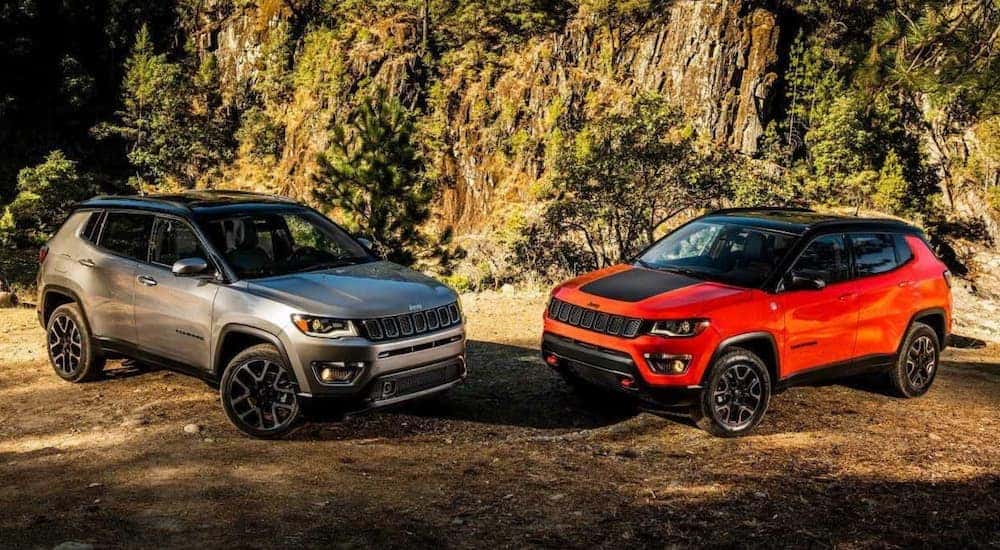
The Jeep Compass is special because it is the perfect blend of on-road drivability with the off-road capabilities everyone associates with the Jeep brand. When Jeep introduced the Compass in 2007, it signaled a radical departure from the traditional looks of the old Willys Overland model that was synonymous with Jeep since it debuted in the early 40s. However, the folks at Jeep had decided to come out with a model designed for a new generation in an all-new century. Buying a used Jeep Compass gives you the ability to drive a compact SUV that is equally at home as a commuter car and a trail runner, with its rugged looks, sporty engine, and suspension system that is all Jeep.
Since its debut, the Jeep Compass has undergone one major update in 2017, which signaled the second generation of the model, as well as a number of incremental changes along the way. Despite these improvements, the Compass has maintained the basic structure that has made it special in the unique Jeep lineup, pointing the way to the future for the storied brand. At Orange Coast, we feature the full lineup of Jeep models, with plenty of new, used, and certified pre-owned Jeep Compass vehicles available for you. This gives you the ability to find the right Compass in your price range with all the features you desire, putting you in the driver’s seat.
Two Special Generations of Compass
The Jeep Compass has gone through a number of changes over the years, but there have only been two generations so far in the history of this vehicle. This is a testament to the fact that Jeep got things right heading out of the gate on the Compass. A great deal of thought was put into the Compass, and it shows in its design and capabilities.
The first Compass to find its way to our driveways featured looks more related to the traditional Jeep Wrangler, with its vertical grille offset by a pair of round headlights. These looks were more in-line with the 20th Century and Jeep’s history of off-roading. However, the Compass was built to provide folks with better on-road performance, so the designers at Jeep went back to the drawing boards and came out with a major change to the looks while still in the midst of the first generation.
This was a very unconventional approach, but it seemed to work as the 2011 Compass model developed a resemblance to the more forward-looking Jeep Cherokee, the popular midsize SUV. This also signaled to drivers that the Compass provides a more refined interior in line with the Cherokee and Grand Cherokee, as well as performance geared more to paved highways than rugged byways. The new grille was sloped, and the headlights were changed to a more modern rectangular shape.
When the second-generation Compass premiered in 2017, it maintained much of the same looks as the revised first-generation model but with more interior creature comforts and a refined powertrain. This model has proven so popular that Jeep has made only a number of technological upgrades, with the current model featuring more standard safety features.
Special Powertrains Designed for Enhanced On and Off-road Performance
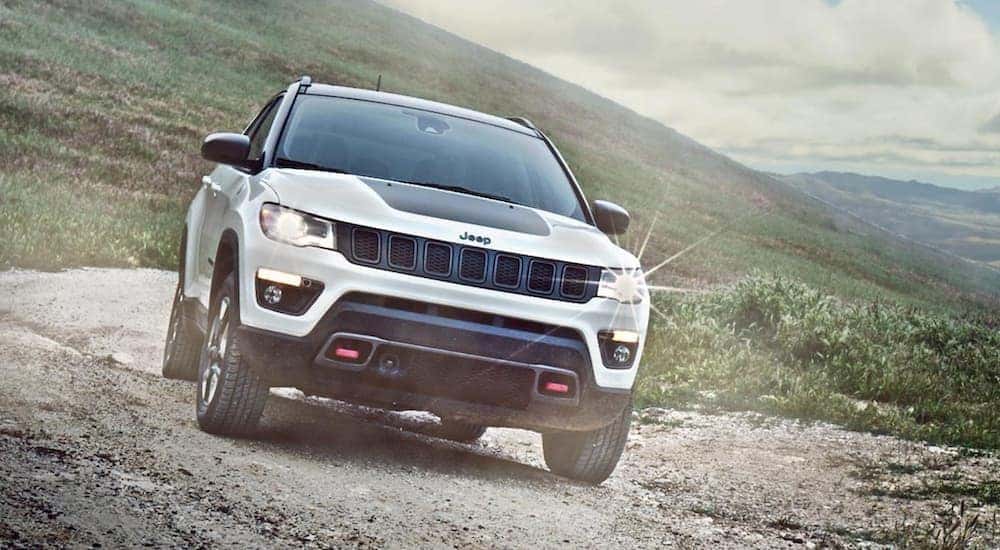
Jeep has always offered the Compass with one 4-cylinder engine, and for a brief period of time, even had a second engine available on this model. The first generation Compass came equipped with a 2.4-iter I-4 gas engine. This came paired with either a 5-speed manual transmission or a continuously variable transmission (CVT). Interestingly enough, the manual transmission provided better fuel economy, with 25 miles per gallon in city driving and 29 miles per gallon on the highway, compared to 23 miles per gallon in the city and 26 miles per gallon on the highway with the CVT. Either way, this engine provides 172 horsepower at 6000 rpm and 165 lb-ft of torque at 4400 rpm.
When Jeep introduced the mid-generation update in 2011, it also introduced a new engine on the Compass. This 2.0-liter I-4 also came with either a 5-speed manual or 6-speed automatic transmission. It also offered improved fuel economy, but at the cost of performance, as it delivers 158 horsepower at 6400 rpm and 141 lb-ft of torque at 5000 rpm. Moreover, this became the standard engine on the Compass, with the more powerful 2.4-liter I-4 available as an option. So, if you are looking at used Jeep Compass models from the 2011 to 2016 model years, you should keep this in mind. If you want a more powerful engine, then you should check under the hood to make sure you are getting the powertrain you want.
With the second-generation Jeep Compass, the model went back to the future. Gone was the 2.0-liter I-4, and the standard engine on all Compass models became a 2.4-liter I-4 Zero Evap M Air engine. The single overhead cam engine comes with a choice of three different transmissions. The standard is a 6-speed manual transmission, with drivers also given a choice of 6-speed and 9-speed automatic transmissions. Whichever transmission you choose, this port fuel injection engine will give you 180 horsepower at 6400 rpm and 175 lb-ft of torque at 3900 rpm.
This boost in performance can be seen in better overall acceleration. For example, the 2022 Compass has been clocked going 0 to 60 miles per hour in just 9.3 seconds, with a top speed of 117 miles per hour. In addition, the increased torque at lower engine speed will come in handy if you choose to go off-roading in a second-generation Jeep Compass with four-wheel drive. Finally, the second generation model retains the Compass’s reputation for exceptional fuel economy, providing 22 miles per gallon in city driving, 31 miles per gallon on the highway, and 25 miles per gallon combined with the 2022 Compass featuring front-wheel drive and the 6-speed manual transmission.
The Compass Is Pointing to a Very Roomy Interior
Despite being a compact SUV, the Compass has always boasted a roomy interior. Throughout each version of this vehicle, Jeep has been able to provide over 101 cubic feet of passenger space. This is more than enough room for up to 5 passengers to sit comfortably. This is a tremendous job of space maximization by Jeep on a vehicle with a 103.7-inch wheelbase.
The first generation of the Jeep Compass provided up to 53.6 cubic feet of cargo space with the second row of seats folded down. The redesigned second-generation increased this amount without cutting into passenger space or increasing the length of the SUV. Instead, the designers at Jeep just made a more efficient use of space. As a result, the trunk on the Compass now holds 27.2 cubic feet of space that can easily be increased to a truly impressive 59.8 cubic feet by simply folding down the second row of seats.
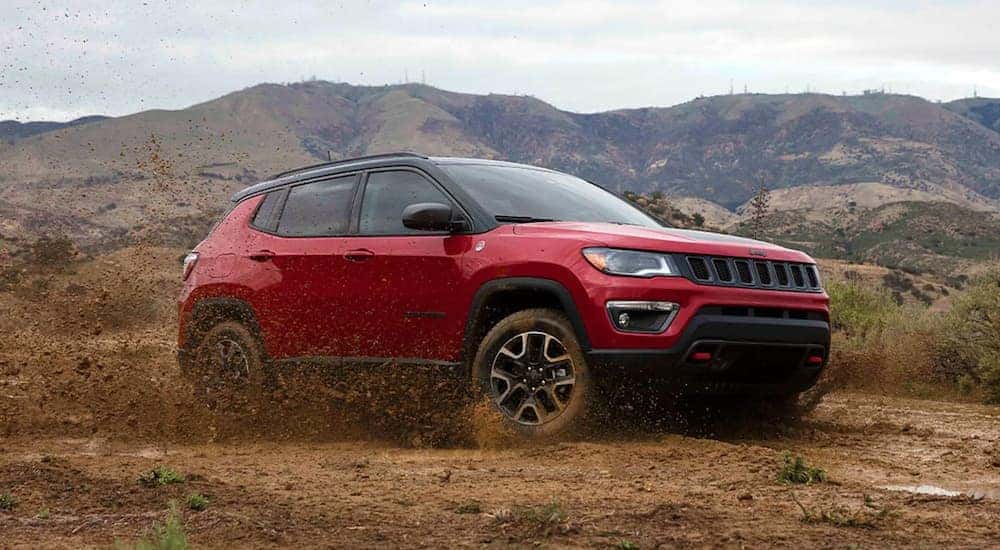
The Compass also holds a nice little edge over the other vehicles in its compact SUV class. First, it offers four-wheel drive, not all-wheel drive like its competitors. This is necessary if you plan to go off-roading in your vehicle, as you will need the transfer case’s ability to shift horsepower between the front and rear axles. In addition, every model of the Jeep Compass features 8.1-inches of ground clearance. This will surely come in handy if you need to traverse obstacles out on the trail. Finally, Jeep offers a number of trims and features designed specifically for the off-road enthusiast who wants to drive a Jeep Compass. If you are looking for a used Compass, you should be able to find one that is ready to go off-roading right off the dealership’s lot! This is something that compact SUVs from other automakers just can’t provide.
Direct Yourself to a Used Jeep Compass
If you want a compact SUV that is versatile, providing superior fuel economy, solid acceleration, and the ability to handle the trail, then all signs point to a used Jeep Compass. Stop by our dealership, and let us get you behind the wheel of a Compass, with a direction unlike any other compact SUV available today.
0 comment(s) so far on What Is Special About the Jeep Compass?