




RV Towing with Ram Trucks

For many people, the idea of owning an RV to take on the road and explore the vast expanses of America is a lifelong dream that can quickly become a reality. While a motorhome is an excellent solution for some, others prefer the freedom and functionality of a towable RV that they can hook up to their truck. But before you continue searching “Ram dealer near me” to find the perfect pickup, you should take a few moments to make sure you know exactly what you’re in for. The more you know, the easier it is to make sure you get just what you need.
We have a lot of people come to us looking for a Ram truck that they can hook up to their RV and hit the road – we’re always excited to work with these customers and hear about their plans and adventures. So today, we thought it would be fun to take a moment to get into some of the basics that you should know before you start making plans. It’s a good idea to learn as much as possible before buying an RV trailer or a Ram truck, so you can make sure you get everything you need for your next big adventure.
Travel Trailer vs Motorhome
RVs can take a few different shapes, though the most common are motorhomes and travel trailers, so let’s start there. A motorhome is the large, traditional RV: a fully motorized home on wheels that you can drive, park, and live in for long periods. You don’t need any other vehicle with this unless you want to pull one behind you, and it isn’t made for towing.
A travel trailer, on the other hand, is essentially a motorhome without the motor – it’s an RV that doesn’t have an engine or similar mechanical systems. It gives you ample living space on wheels, but you need to hook it to another vehicle to tow it behind. While some large SUVs are strong enough to handle travel trailers, a powerful pickup like you’ll find at the Ram dealer near you is the traditional solution to hauling a travel trailer around. The most significant advantage of choosing this type of RV is that you can arrive at your destination, unhitch the RV, and then you have your truck to get around in without the large size and weight of the trailer.

RV Towing Terms to Know
Before choosing a travel trailer, whether you are looking to buy one or rent one, you should know certain terms as they relate to towing your RV. You may want to plan everything out with an RV to tow and a truck from the Ram dealer near you all at the same time, but we suggest starting with some research on the right RV first. The RV you want will dictate what kind of truck you need; it’s often easier to start with it than to work backward.
There are some specific and very important RV towing terms related to weight that you need to know when looking at your options. While these should not govern all of your decisions on the right RV, they are a great place to start.
- Unloaded Vehicle Weight (UVW) – The lowest weight you will find, the UVW is how much an RV weighs fresh from the factory with just the basic equipment.
- Dry Weight – Similar to UVW, the dry weight is the base weight of an RV trailer with the standard equipment in it but does not necessarily include the weight of fuel or optional equipment.
- Cargo Weight – This is the weight of all the stuff that you load up into your trailer. It can include any accessories you add, aftermarket additions to your RV, and supplies such as coolers, food, etc.
- Gross Vehicle Weight (GVW) – This is the total weight of your RV with all the cargo, supplies, fuel, and everything else in it. Basically, all the weight added up, representing the actual weight of a vehicle.
- Gross Trailer Weight (GTW) – You may see this term used instead to refer to the GVW of a trailer. They are virtually interchangeable in meaning.
- Gross Vehicle Weight Rating (GVWR) – This is a number you will see listed for each RV travel trailer, motorhome, and every other vehicle you find. It indicates the absolute maximum GVW (or trailer weight) that the vehicle is designed to handle. So the GVWR, minus the UVW or Dry Weight, tells you how much weight you can add in cargo and supplies. You should never go over the GVWR, and in general, it’s best to stay well below it to be safe.
Towing 101
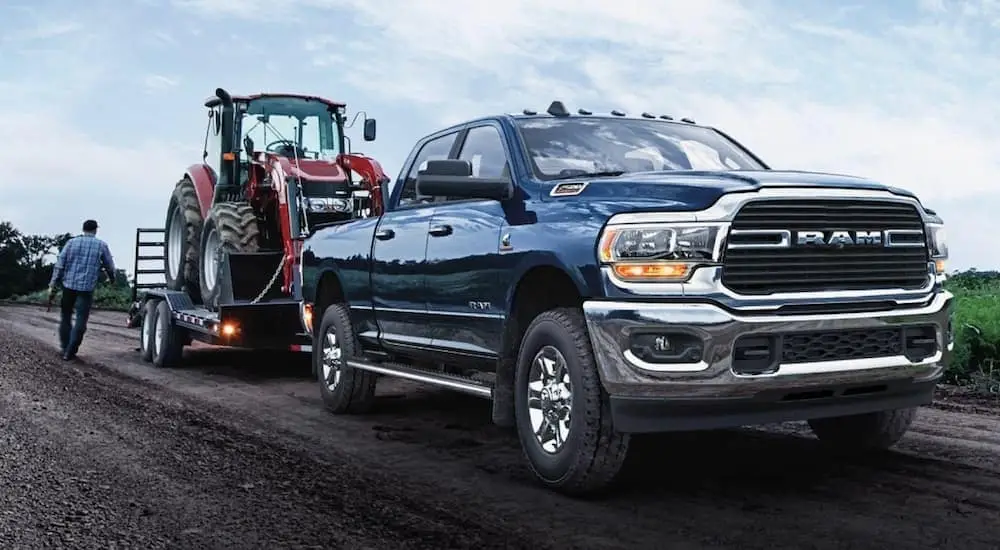
Now that you understand different terms as they relate to weight when it comes to towing an RV, there are some general towing terms that you need to know. None of these are more important than the other – they all make up a complete understanding that you should have before you do any towing.
- Towing Capacity/Rating – This is the maximum amount of weight a truck or other vehicle can pull behind it. Never try to tow more weight than this limit, or you can seriously damage your vehicle.
- Payload Capacity – With a truck, this is the maximum weight you can physically load into and on the truck itself. It includes passengers, supplies and cargo, and everything in the cabin and on the bed.
- Fifthwheel/Gooseneck Towing – Fifth wheel or gooseneck towing refers to a kind of towing where you connect a trailer or RV to a special hitch in the bed of the truck, rather than one on the rear bumper. Some models of trucks will have higher fifth wheel ratings than conventional towing capacities.
- Electric Brakes and Controllers – Electric brakes in an RV trailer help slow your vehicle down by applying brakes to the trailer itself, rather than only relying on your truck’s brakes. A Ram pickup with an electric brake controller can send a signal to the trailer to engage its brakes.
Choosing the Right Ram Truck
So now that you have all of this terminology under your belt, you’re ready to find the right truck at the Ram dealer near you with everything you need. First and foremost, you’ll want to look at towing capacity on any Ram truck you’re interested in and compare it to the GVWR of an RV you’re looking to pull. We suggest picking a truck that can handle more weight than the GVWR, so you know it will always be able to tow your RV, even if you really load it up.
For example, if you’re considering an RV with a GVWR of 10,000 lbs, then any current Ram pickup has the potential to work. You’ll want to choose something like the Ram 1500 with the available HEMI V8 engine, however, to ensure it has the towing capacity you need. On the other hand, if you want an RV with a GVWR much higher, something like 15,000 lbs or more, you’ll need a more powerful pickup. Perhaps the Ram 2500 or even the Ram 3500?
Let Orange Coast Help
The good news is that when it comes to finding just the right truck at the Ram dealer near you, you’re not alone. Call or visit us at Orange Coast CDJRF today, and we’ll make sure you have the perfect truck for what you need.
0 comment(s) so far on RV Towing with Ram Trucks