






Shopping Ram Trucks at Orange Coast Auto

One of our favorite lineups at Orange Coast is the iconic lineup of Ram trucks. Ram offers an extensive line of customizable trucks that can come designed as heavy-duty as you can handle. Because Rams are produced in so many variations, there are several factors to consider before making your purchase decision. You need to choose from a Ram 1500, 2500, or 3500, each with enhancement packages to build up your pickup. But one major question to think about before scheduling your test drive is: Is diesel right for you?
Diesel engines offer benefits and setbacks that should be weighed before you commit to a new or pre-owned truck. Base your decision on your intended uses for your truck to maximize your driving experience for the long haul. If you’re like most Ram drivers, you’re probably going to want to keep your pickup for many years to come. Choosing the right engine will make sure you don’t have any regrets down the road as you and your truck grow old together. So let’s go over some information to aid you in your decision between gas and diesel.
Pros and Cons of a Gas vs Diesel Ram 1500
If you’re basing your Ram 1500 buying decision solely on the price at the pump, you have probably noticed that diesel fuel comes with a premium price tag compared to regular gasoline at most North American gas stations. But don’t just take this initial cost at face value. Diesel fuel offers unique benefits that make this added cost worthwhile for many truck drivers. Despite the initial upcharge, diesel fuel is a dense and efficient energy source that can help you dodge certain repairs you’re more likely to face with a gasoline-powered truck.
Years back, diesel engines gained a reputation for having higher maintenance requirements and a noisier engine. However, modern diesel engines have been refined to avoid many of these issues from the past. One example is the glow plug. Smaller diesel engines used to rely on this electrical wire to heat up combustion chambers on a cold day. However, newer technology has let computer controls take over this function.
Because diesel fuel auto ignites, spark plugs, and spark wires are not required– providing automatic maintenance savings and lower chances of a breakdown. For most automobiles, the recommended schedule for replacing spark plugs is every 30,000 miles. Depending on your vehicle, spark plug replacement can cost anywhere from about $100-$630. This should be factored into your cost calculations when comparing a diesel truck to a gasoline engine because, really, a diesel engine may end up costing you less.

Understanding Compression Ratios and Engine Mechanics
Both diesel and gasoline engines use internal combustion reactions to transform chemical energy (fuel) into mechanical energy (wheels turning). By harvesting this mechanical energy, pistons move up and down to kick-off a chain reaction that moves the wheels. The main difference between diesel and gasoline engines is how the fuel combusts. In diesel engines, the air is heated and compressed before the fuel is injected becomes ignited. The compressed air produces enough heat to cause a combustion reaction, hence producing mechanical energy.
However, gasoline engines are a bit more complicated. Instead of being created by the heat of compressed air, sparks are produced separately by spark plugs. This spark meets the gasoline and air mixture in the engine to cause a combustion reaction. Gasoline is lighter and less dense, so it doesn’t yield as much energy as diesel fuel does.
Because of this difference, diesel engines are much more efficient and powerful than gas engines. Efficiency can be measured by a calculation called the compression ratio. Diesel engines have a high compression ratio, ranging between 14:1 and 25:1. Gasoline engines operate at a much lower compression ratio between 8:1 and 12:1. This means that concentrated diesel is more likely to react with compressed hot air molecules than gasoline is.
As previously described, diesel-fueled trucks and gasoline-fueled trucks run on different mechanics. This can result in a greater susceptibility for gas-powered engines to experience breakdowns. A typical gas-engine relies on a carburetor to mix air into the gas before it is compressed. Sometimes, the air gets overly compressed, leading to spontaneous combustion and excessive heat. This issue is called knocking and can result in serious (and costly) damage to the engine.
The True Cost of Diesel Fuel
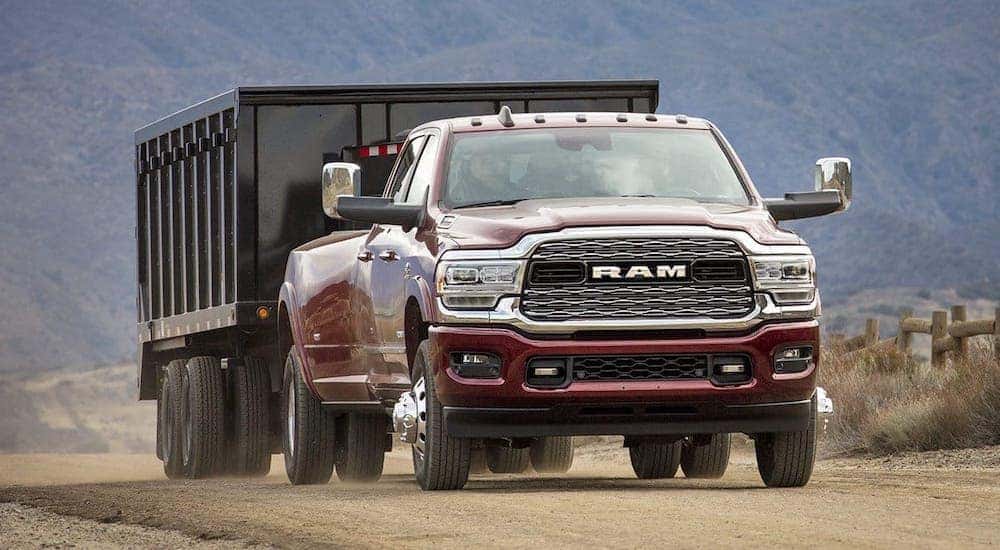
In the past, diesel fuel was cheaper than gasoline, and this remains the case in many countries around the world. Since gasoline requires more refining than diesel, it makes sense the diesel would be less expensive. Both gasoline and diesel start as crude oil that must be extracted from the earth. Refineries process crude oil into different products, including kerosene, jet fuel, gasoline, and diesel. Data from 161 different countries actually shows that diesel is cheaper than gasoline in 84% of countries. Unfortunately, the United States is not one of them.
Gasoline is much more volatile than diesel. Diesel is dense and oily, less likely to combust unexpectedly, making it a stable fuel that’s easier to produce. The reason for diesel’s higher cost in the U.S. is due to a couple of factors, the first one being tax rates. Diesel fuel is federally taxed at up to 24.4 cents per gallon, whereas gasoline is taxed at 18.4 cents per gallon. This tax is passed on to the driver, who ends up paying more each time they fill up with diesel.
Because diesel is used to fuel industrial equipment (like boats, freight trucks, and generators), the demand for diesel goes up during times of economic growth and industrial expansion. Diesel prices are also impacted by the weather since home heating oil is closely related to diesel fuel. A product called Ultra-Low Sulfur Diesel was introduced from 2006-2010, which increased diesel production but also required more refining than traditional diesel fuel. All of these factors and fluctuations can make diesel engines more expensive to keep full.
Get the Information You Need to Make Your Decision
At Orange Coast Auto, we understand that any decisions you make regarding the details of your truck are yours alone to make. We provide the research so you can make an educated decision that works best for you. Every driver is different. That’s why we offer an extensive inventory that never leaves our customers feeling restricted. If there’s one thing that’s important to our truck-buyers, it’s freedom. Our new vehicle inventory and knowledgeable staff provide you the ultimate freedom for your truck-buying experience.
Between 2013-2017, diesel prices have cost an average of 31 cents per gallon more than gasoline, with price differences fluctuating between 10 cents difference to 90 cents. Because of this trend, studies show that 52% of drivers prefer to steer away from diesel completely. Nonetheless, interest in diesel appears to be on the rise, perhaps due to the benefits noted in our article above. In 2013, only 38% of drivers were open even to consider a diesel engine, and by 2017, that number had risen to 45%.
Whatever you choose, you can’t go wrong with a Ram. These trucks have a long history of award-winning performance, diesel or not. If you’re still unsure of which engine to choose, speak to one of our dealership representatives to weigh your options. We’re happy to equip you with unbiased information because customer satisfaction is our top priority. Check out the latest Rams at Orange Coast Auto today!
0 comment(s) so far on Shopping Ram Trucks at Orange Coast Auto