






Time, Trims, and Tech: How the Ford F-150 Developed into the Truck It Is Today

When it comes to choosing a used pickup truck, most drivers will list reliability and capability as their top two concerns. After all, having a pickup truck hardly matters if it’s on the side of the road or if it can’t tow and stow the right amount of stuff. When it comes to the used Ford F-150, though, those two components are already a given. With best-in-class payload rates and impressive towing capability, a used Ford F-150 is a solid investment for those who need to get the job done.
But what about having a little fun on the side? This is the twenty-first century, after all, and nearly everyone has a smartphone. Engineering and design has lept light years ahead in every facet of our daily lives, so it stands to reason that our trucks should be more technologically advanced––both inside and out. The Ford F-150 has definitely evolved over the ages, with technological developments aiding both how the truck drives, how well it tows, and how well the driver enjoys the ride.
Wheels to the Road: Engineering Technology and the Ford F-150
The modern Ford F-150 can trace its roots back to the Model TT truck, which first appeared on the roads of America in 1917. While this truck may seem rudimentary compared to today’s vehicles, bear in mind that a truck that could handle a one-ton payload was ground-breaking at the time. Chassis cabs were brand new technology, as the frame had to be reinforced to carry a pickup bed, which was sold separately until 1925.
The next major technological leap for the Ford F-150 was the addition of four-wheel drive in 1959. While many pickup truck drivers––especially those who tow those heavy loads––can’t imagine driving without this feature, it’s been an option for less than one hundred years.
In 1999, Ford’s engineering technology was back at it with something new. This time, it was the SVT Lightning. Equipped with 360 horsepower and 440 lb-ft of torque, the Lightning was considered the “most powerful production passenger vehicle” in the US at the time. It remains one of the fastest trucks to date, with a 0-60 mile per hour burn time of just 5.2 seconds.
Today’s Ford F-150 features all of the latest and greatest engineering developments, both under the hood and in the body. From industry-first aluminum bodies to smaller, lighter-weight turbocharged engines, Ford embraces technology in every design aspect of the F-150. From tighter aerodynamics to EcoBoost engines, it’s clear that Ford engineers are on the cutting edge.
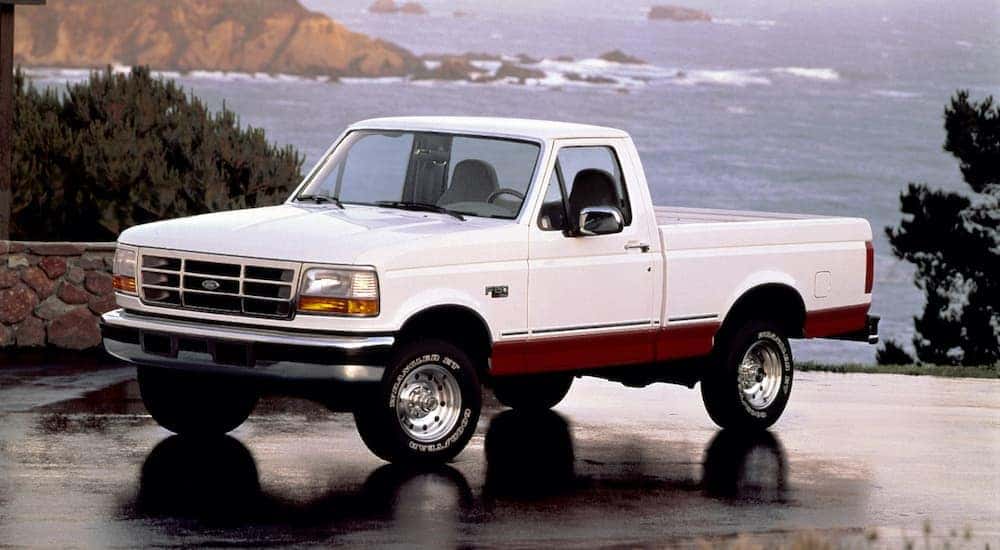
The Evolution of Towing in the Ford F-150
Pickup trucks have always been intended to tow and haul, but how well they do this job is sometimes up for debate. Some trucks, particularly the Ford F-150, excel at their work duties. Over time, however, engineers have discovered ways to enhance the towing experience with added technological features. What was once a matter of hitching up and hoping for the best has now become a safer, more scientific method of getting precious heavy cargo where it needs to go.
Glancing all the way back to 2010, the Ford F-150 was a big deal ahead of its time. With a towing maximum of 11,300 pounds, even regular cab models could handle the intricacies of a 20-foot trailer, thanks to enhanced towing technology. A used Ford F-150 from 2010 features a class-first integrated trailer brake control, as well as built-in sway control and a rearview camera to assist with the hitching process.
By 2015, sway control and built-in brakes were standard amongst hauling-rated trucks, along with hill-start assist, a type of technology that prevents that awkward backwards roll when accelerating uphill from a full stop. The 2015 models also included a hydroformed, high strength steel frame, which increased towing capacity to 12,200 pounds.
A new type of trailering technology was added in 2017. Named Pro Trailer Backup Assist, this feature allowed drivers to use a dash-mounted knob and the view from the rearview camera screen to steer a trailer in reverse. This reduced jack-knifing and gave extra trailer-driving credibility to drivers who needed to back into awkward or tight spots.
Today’s Ford F-150 still includes some of this “early” trailering technology. With the ability to tow over 13,000 pounds, it’s clear that the 2020 F-150 is fully intended to trailer, and trailer well. To make the job easier, hill start assist and sway control are standard on all models. Blind spot sensing technology not only alerts to vehicles in the blind spot of the truck but the trailer, as well. Dynamic Hitch Assist helps guide you to your ball hitch with a direct dynamic guideline. Add the towing technology package to upgrade the F-150 with a 360-degree camera and split-view display so that you can keep an eye on trailer activity at all times, along with active parking assist.
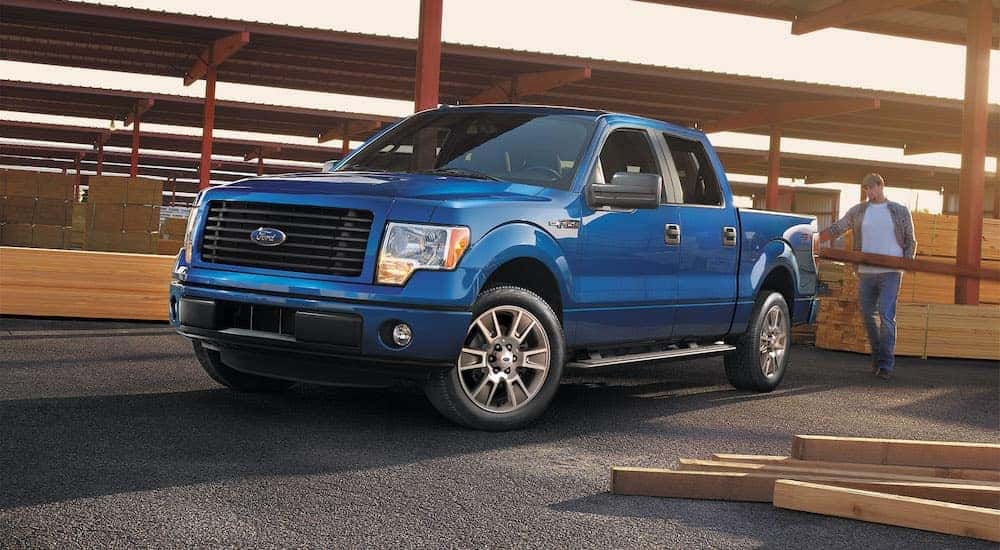
Tech Features Inside the Cabin of the Ford F-150
While technological advances have definitely had a positive impact on the way the Ford-150 drives and its capabilities as a work truck, technology has also improved the driver experience inside the cab, as well.
Last century’s pickup trucks included AM/FM radio and hand-crank windows, and if those are features you enjoy, some trucks still have these rudimentary options. The Ford F-150, however, has been incorporating comfort and convenience technology in its trucks for years.
Looking at a used Ford F-150 from 2010, you might be surprised to find an intuitively-designed interior. Not only does it include plenty of storage nooks and crannies, but the console is specifically designed for stashing a laptop during work hours. A USB port, two 12V outlets, and auxiliary jacks for streaming audio are added to the dashboard, as well. There’s even a Tool Link system, which uses radiofrequency to keep a real-time inventory of items in the pickup box.
The 2015 Ford F-150 adds what is fondly referred to as “tailgate tech.” This includes built-in cargo ramps, an integrated step to help drivers access the bed, and push-button tailgate lowering via the remote key fob. Inside, drivers have access to two three-prong household-style power outlets, heated and cooled front seats, heated rear seats, voice-activated navigation and rear seat belts that inflate to protect passengers in the event of an accident. In fact, the 2015 Ford F-150 can read your text messages to you as you’re driving.
The 2017 Ford F-150 is designed to help workers drive and drivers work, with its built-in WiFi hotspot. The truck has the ability to read your text messages aloud to you as you drive, meaning you never have to miss that important update from your boss or worksite again. Voice activated navigation with real-time traffic updates helps drivers get from spot to spot without delay. You can even enjoy running boards that pop out when the doors are opened and fold themselves away as the doors are closed.
The technology features of used Ford F-150 models aren’t too different from today’s models. The 2020 F-150 still offers a 4G LTE WiFi hotspot, only now it includes connectivity for up to 10 devices. Built-in apps such as FordPass help drivers keep track of vehicle information, as well as lock, unlock, and start the vehicle remotely. The Ford+Alexa app adds navigation, shopping, traffic, and support for Smart Home devices even while you’re on the road, while Waze technology helps drivers find alternate routes to avoid massive traffic jams.
Who Know What the Future Holds for the F-150
Knowing where the Ford F-150 has been helps guide us towards the future. While we’re still not quite ready for self-hauling trailers and automatic tow hitches, drivers can look forward to ever-improving engine power and efficiency, thanks to new developments in technology. Furthermore, drivers will likely enjoy more comfort in the cabin if the used Ford F-150 of recent years is anything to go by. Inside and out, Ford engineers continue to employ technology to make the F-150 one of the leading pickup trucks on the road. As a result, drivers can look forward to trucks that are reliable and relevant for a long time to come, whether new or used. Contact us at Orange Coast CJDRF to learn more today.
0 comment(s) so far on Time, Trims, and Tech: How the Ford F-150 Developed into the Truck It Is Today